Linger
Your private diary, stored in your Google Drive.
Only accesses diary files created by this app.
Your private diary, stored in your Google Drive.
Only accesses diary files created by this app.
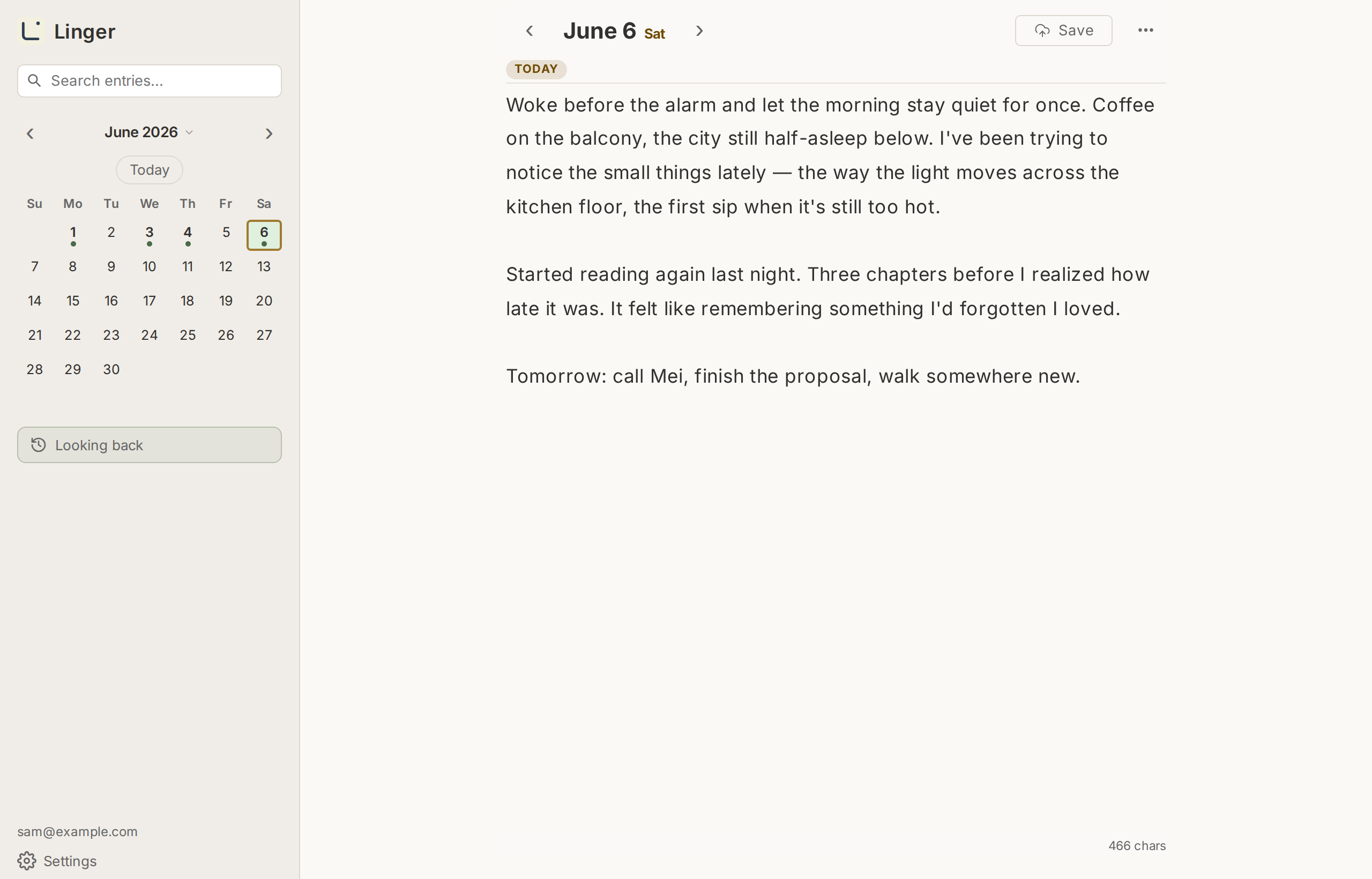
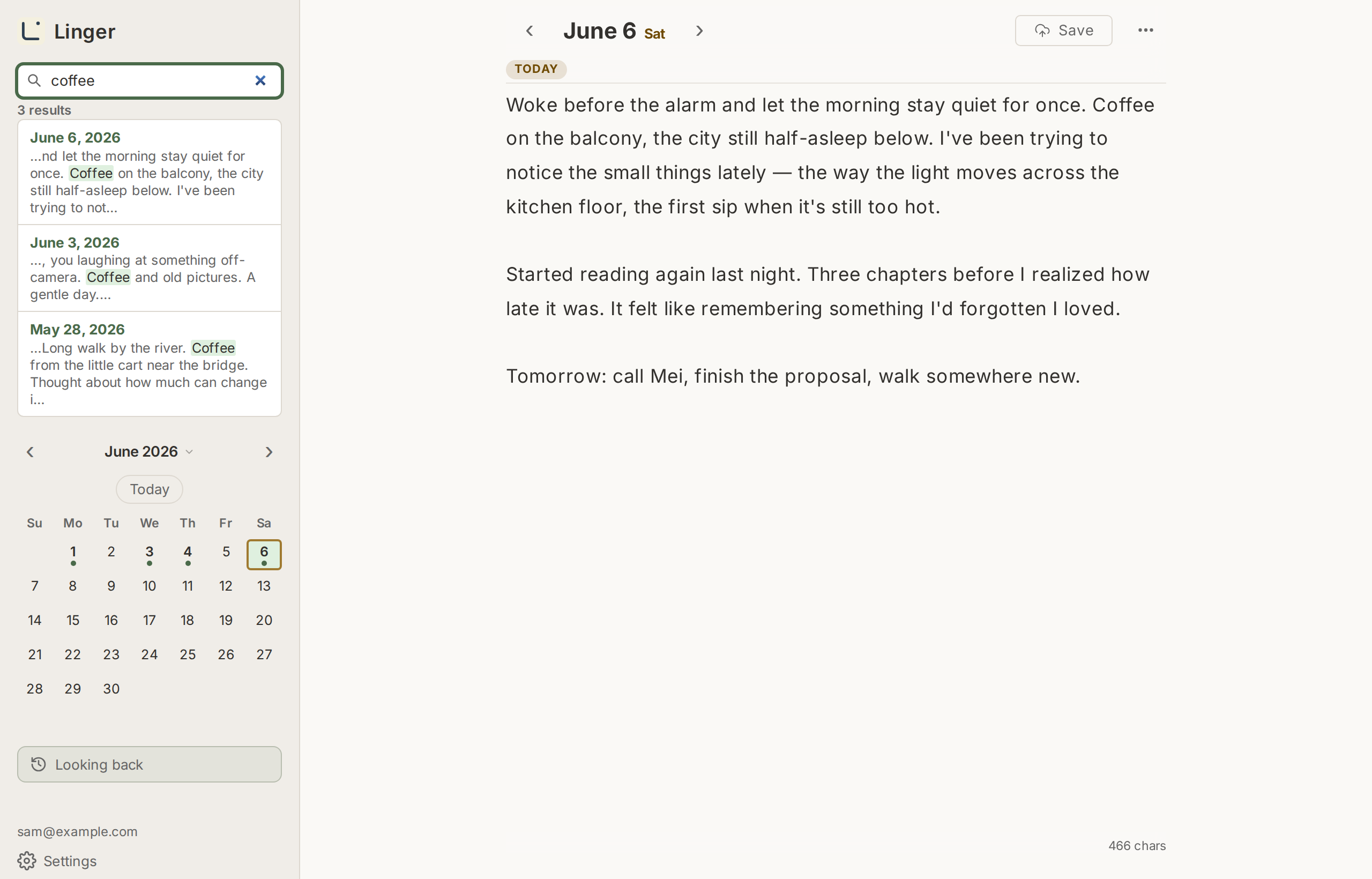
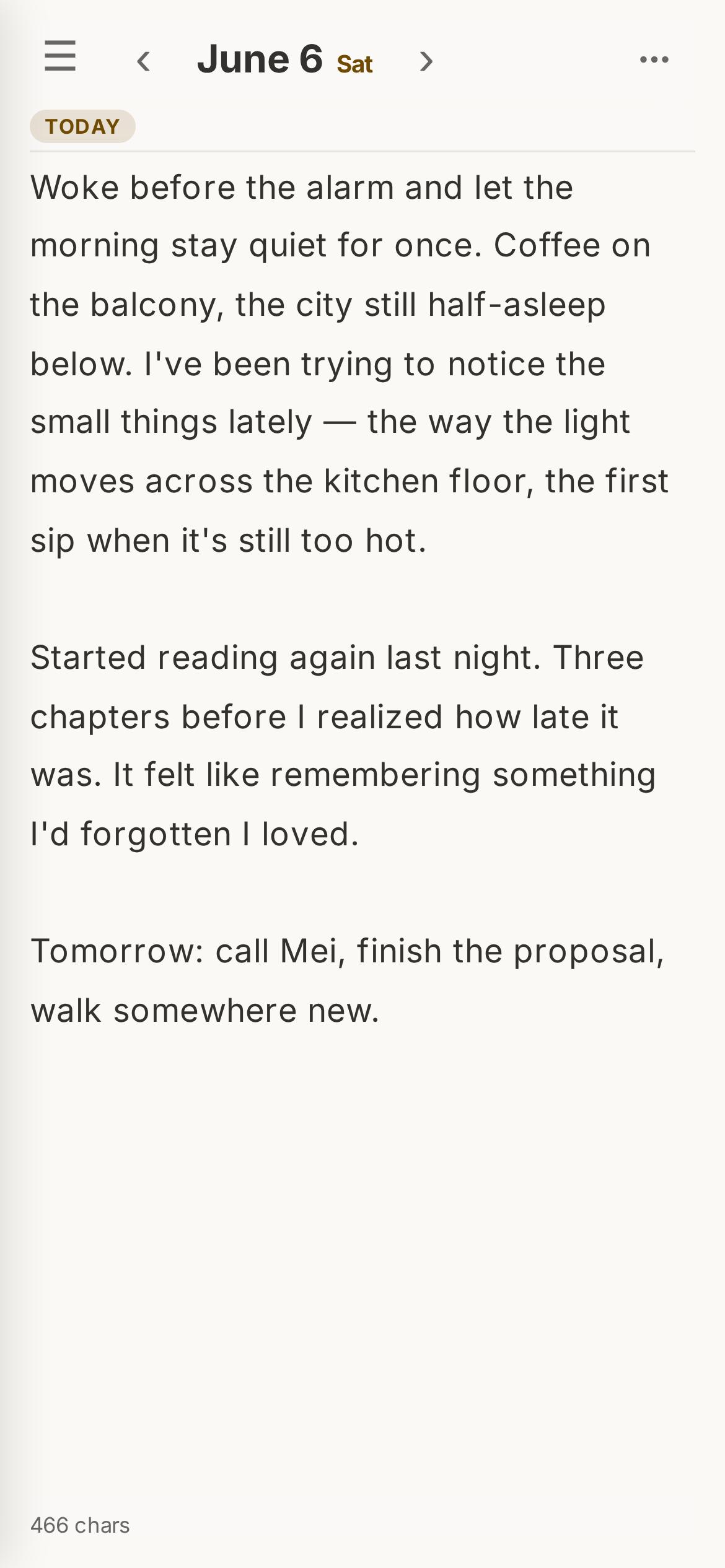
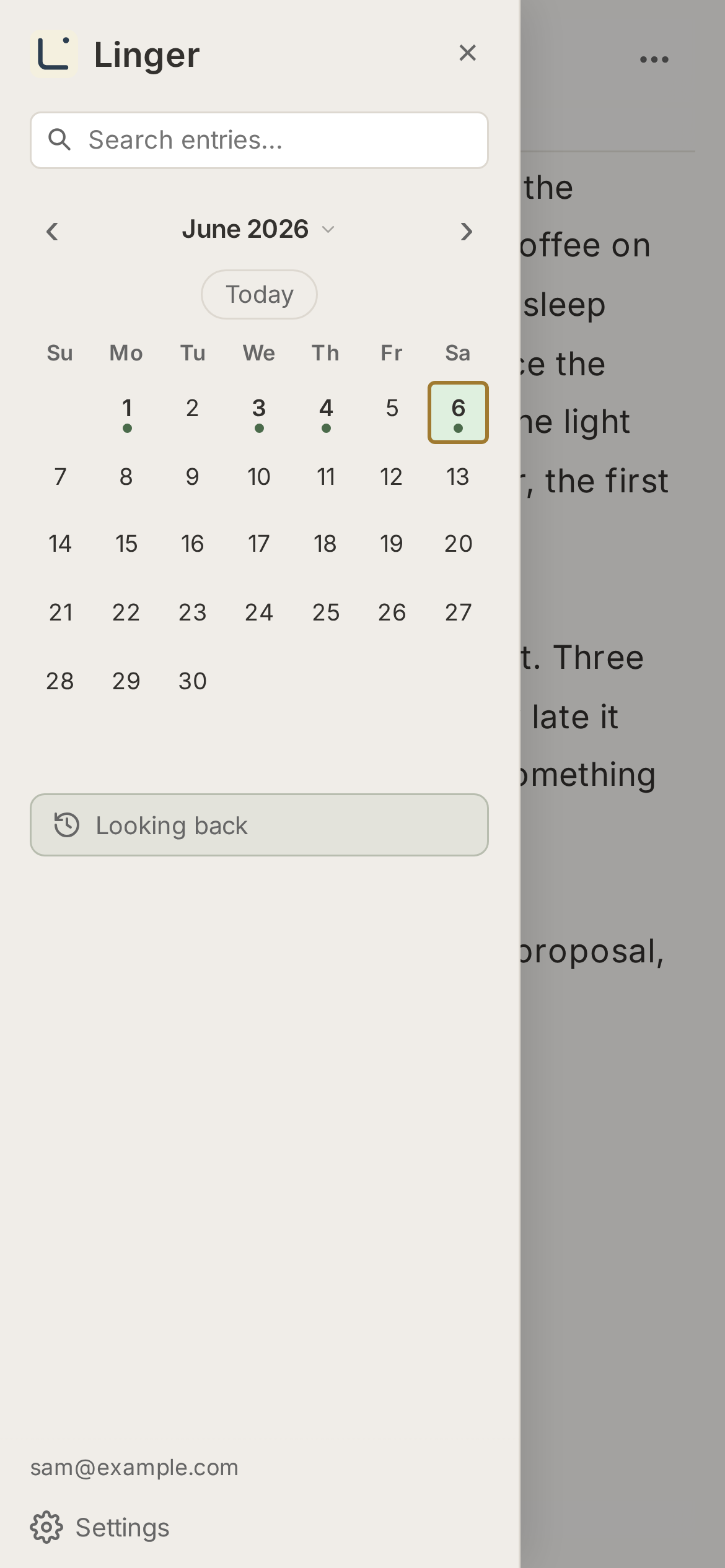
Works just as well on your phone.
Linger is a personal diary web app. Write daily entries and access them from any device. Your entries are saved as individual plain-text files inside your own Google Drive account — you retain full ownership and control of your data at all times.
To store and retrieve your diary files, Linger requests the Google Drive drive.file OAuth scope, along with the standard openid and email scopes used only to identify your account at sign-in. The drive.file scope grants access exclusively to files that Linger itself creates — it cannot read, modify, or delete any other files in your Google Drive.
Diary entries reside entirely in your own Google Drive folder (linger_diary/). No diary content is stored on Linger's servers. OAuth tokens are handled server-side and are never exposed to the browser.
For full details, see the Privacy Policy.
You don't have to take our word for it. Here are concrete steps you can take to verify that Linger cannot read, copy, or transmit your diary entries anywhere other than your own Google Drive.
drive.file scope, which cannot access any other files in your Drive. You can revoke access there at any time./api/drive/… (the Cloudflare proxy on this domain) or accounts.google.com (OAuth). No requests are made to any third-party server.